


What Is A Rotary Drum Flaker?
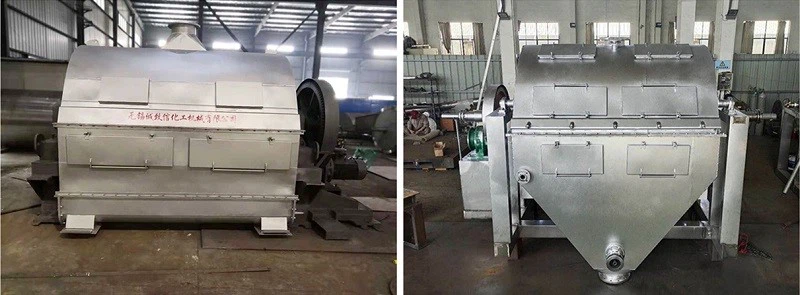
A rotary drum flaker or double drum flaker reduces the liquid moisture content of materials by bringing them into contact with heated gas. The drum flaker manufacturers typically design them as consisting of rotating cylindrical tubes. The device is designed to be slightly tilted to facilitate flow under gravity.
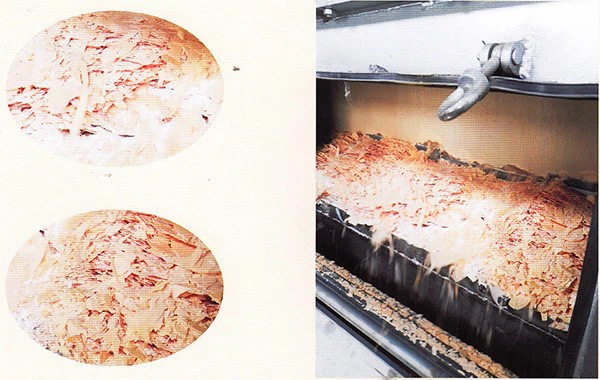
Industrial drum flaker machines are used for drying viscous liquids, slurries, pastes, and suspensions, with the final product being flakes or powder. These drum flakers are primarily used in the pharmaceutical, chemical, and fast-moving consumer goods industries. For thinner, lower-density products, a double-drum dryer is typically required.
WUXI CHENGZHIXIN is one of the best rotary drum flaker machine manufacturers and suppliers in China, which also provides installation and maintenance services.
How Does A Rotary Drum Dryer Work
The material to be fed into the equipment enters the double drum flaker, which then rotates. During rotation, a series of fins arranged on the inner wall lift the material. After rising to a certain height, the material rolls off the fins and falls to the bottom of the rotary drum dryer, passing through the high-temperature airflow during its descent.
WUXI CHENGZHIXIN is one of the best chemical drum flaker manufacturers and suppliers in China, and also provides installation and maintenance services.
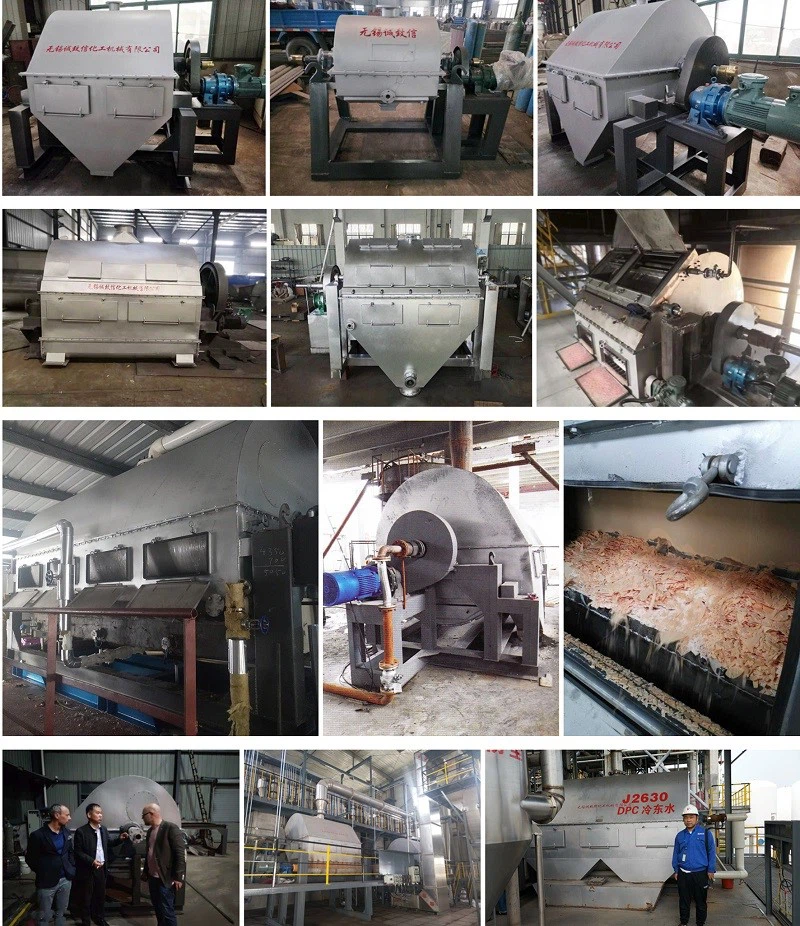
CHENGZHIXIN Offers A Variety of Rotary Drum Flaker Machines:
● Classified by the number of drums: Single drum or double drum options are available.
● Classified by the pressure surrounding the drum: Atmospheric drum flaker and the vacuum drum flaker options are available.
● Classified by the feeding arrangement: There are nip feed, splash feed, dip feed, and roller feed drums options are available.
● Classified by the material of construction: Alloy steel, stainless steel, chrome or nickel-plated steel options are available.
WUXI CHENGZHIXIN is one of the best double drum flaker manufacturers and suppliers in China, and also provides installation and maintenance services.
Typical Technical Specifications
|
Model |
Drum Specifications (mm) |
Motor Power (kw) |
Hot Shaft Speed (r/min) |
Reference Dimensions (mm) |
||
|
L |
W |
H |
||||
|
CZX400 |
400×400 |
3 |
2-10 |
1800 |
800 |
1000 |
|
CZX600 Ⅰ |
600×600 |
3-4 |
2-10 |
2100 |
1100 |
1500 |
|
CZX600 Ⅱ |
600×800 |
3-4 |
2-10 |
2300 |
1100 |
1500 |
|
CZX800 Ⅰ |
800×800 |
4-5.5 |
2-10 |
2600 |
1300 |
1700 |
|
CZX800 Ⅱ |
800×1000 |
4-5.5 |
2-10 |
2800 |
1300 |
1700 |
|
CZX1000 Ⅰ |
1000×1000 |
4-5.5 |
2-10 |
2800 |
1500 |
1900 |
|
CZX1200 Ⅰ |
1200×1200 |
5.5-7.5 |
2-10 |
3100 |
1700 |
2000 |
|
CZX1200 Ⅱ |
1200×1500 |
5.5-7.5 |
2-10 |
3400 |
1700 |
2000 |
|
CZX1500 Ⅰ |
1500×1500 |
5.5-7.5 |
2-10 |
4200 |
2100 |
2400 |
|
CZX1600 Ⅰ |
1600×1800 |
7.5-11 |
2-10 |
4700 |
2200 |
2600 |
|
CZX1800 Ⅰ |
1800×1800 |
11-15 |
2-10 |
4700 |
2400 |
2700 |
|
CZX1800 Ⅱ |
1800×2000 |
11-15 |
2-10 |
5000 |
2400 |
2700 |
|
CZX2000 Ⅰ |
2000×2000 |
11-15 |
2-10 |
5000 |
2600 |
2800 |
|
CZX2000 Ⅱ |
2000×2500 |
15-18.5 |
2-10 |
5500 |
2600 |
2800 |
|
CZX2000 Ⅲ |
2000×3000 |
15-18.5 |
2-10 |
6000 |
2600 |
2800 |
| CZX2500 Ⅰ | 2500×3000 | 18.5-22 | 2-10 | 6000 | 2800 | 2900 |
| CZX2500 Ⅱ | 2500×3500 | 18.5-22 | 2-10 | 6800 | 2800 | 2900 |
Customized Services And Options
* Select materials according to product and design conditions;
* The main drum is made of austenitic stainless steel, carbon steel, Hastelloy, 906L, and other materials;
* Customizable size and capacity;
* Explosion-proof electrical system optional;
* Closed circuit cooling system with chiller optional;
* Machine enclosure and inertization materials optional;
* Discharge screw conveyor optional.
FAQ
Q1: What is the difference between a Rotary Drum Flaker and a Rotary Dryer? Which one suits my material?
* Rotary Drum Flaker: Primarily used to cool and solidify molten liquids (such as sulfur, resins, fatty acids) into flakes. The core process is "cooling" and "solidification."
* Rotary Dryer: Mainly used to remove moisture from solid materials (such as slag, wood chips). The core process is "heating" and "dehydration."
Our Advice: If your raw material is a high-temperature liquid that needs to be converted into solid flakes, the Rotary Drum Flaker is the correct choice.
Q2: What is the capacity of the rotary drum flaker? Is it adjustable?
A: Capacity depends on material characteristics (viscosity, melting point) and the desired flake thickness. Our equipment typically supports frequency converters (VFD) to adjust the drum speed and feeder speed, thereby controlling output and flake thickness.
Typical Range: Depending on the model, hourly output can range from hundreds of kilograms to several tons.
Customization: We can customize the design based on your specific capacity requirements (e.g., 500kg/h or 5T/h).
Q3: What material is the drum made of? How does it handle corrosive materials?
A: The drum is the core component in direct contact with the material.
Standard Configuration: Usually made of high-quality Carbon Steel, suitable for non-corrosive or weakly corrosive materials.
Anti-Corrosion Configuration: For acidic or highly corrosive materials (such as certain chemicals), we offer Stainless Steel drums (e.g., SS304, SS316L) or special coatings/rubber linings on carbon steel drums.
Internal Structure: While the internal structure differs from a dryer, we can optimize feeding uniformity by referencing the lifting plate design concepts used in dryers for special materials.
Q4: What is the material of the Scraper (Doctor Blade)? Is it prone to wear?
A: The scraper is responsible for peeling the cooled flakes off the drum surface.
Material Selection: We typically use high-strength stainless steel or special alloy steel.
Durability: The scraper is designed with a pressure adjustment mechanism to ensure clean scraping while minimizing wear on the drum surface. For highly abrasive materials, we offer replaceable wear-resistant liner solutions.
Q5: Can you customize the equipment based on my factory conditions?
A: Yes, non-standard customization is our strength.
Heat/Cooling Source Adaptation: We can design compatible cooling water circulation systems or specific heating/cooling medium interfaces based on your factory's existing utilities.
Space Adaptation: We can adjust the equipment's length-to-diameter ratio and layout to fit your limited workshop space.
Automation: PLC control systems are available as an option, enabling one-touch start/stop and automatic temperature monitoring (similar to dryer over-temperature alarms), reducing manual operation errors.
Q6: Is the equipment energy-efficient? How is energy saved?
A: The rotary drum flaker mainly consumes cooling water (or medium) and electricity for the drive motor.
Energy-Saving Design: We utilize optimized drum wall thickness designs to improve heat exchange efficiency and reduce the consumption of cooling media.
Sealing: High-performance sealing materials are used at connection points to prevent dust escape and heat/cold loss, ensuring a clean workshop environment and minimal energy consumption.
Q7: Do you provide installation and training services?
A: We provide comprehensive turnkey services.
Installation: Detailed installation drawings and on-site guidance (or video guidance) are provided.
Training: We train your operators on how to adjust scraper angles, control drum speed, and handle common issues (such as sticking or uneven flake thickness).
Spare Parts: We provide free wear parts like seals and scraper blades with the machine and commit to long-term supply of core components.
Q8: If I send you a sample of my material, can you perform a test?
A: Absolutely. To eliminate your purchasing concerns, we strongly recommend sending samples.
Test Report: We will run a trial using your material in our lab or factory and provide a detailed test report, including flake formation results, actual output, and energy consumption data. This is the most direct way to build trust.
Purchasing Tips for Buyers
To help us provide you with a more precise quotation, please provide the following information when inquiring:
* Material Name & Characteristics (e.g., melting point, viscosity, corrosiveness).
* Raw Material State (Is it liquid, slurry, or molten?).
* Target Output (How many tons per hour do you need to process?).
* Finished Product Requirements (Size and thickness requirements for the flakes).
Hot Tags: rotary drum flaker, China rotary drum flaker manufacturers, suppliers, factory, Crystallization Slicer, Industrial Drum Flaker, Rotary Drum Flaker, Cooling Drum Flaker, Condensation Rotary Drum Flaker, Screw Conveyor For Bulk Materials


