

Hey there! As a supplier of Condensing Drum Flakers, I often get asked, "Can a Condensing Drum Flaker be used for chemical material flaking?" Well, let's dive right into it and find out.
First off, let's talk a bit about what a Condensing Drum Flaker is. It's a nifty piece of equipment that's designed to convert liquid or molten materials into solid flakes. The basic principle behind it is that the liquid material is spread onto the surface of a rotating drum, which is cooled from the inside. As the drum rotates, the material on its surface cools and solidifies, forming flakes that can then be scraped off.
Now, when it comes to chemical materials, the answer to whether a Condensing Drum Flaker can be used is a resounding yes! There are several reasons why these flakers are a great fit for chemical material flaking.

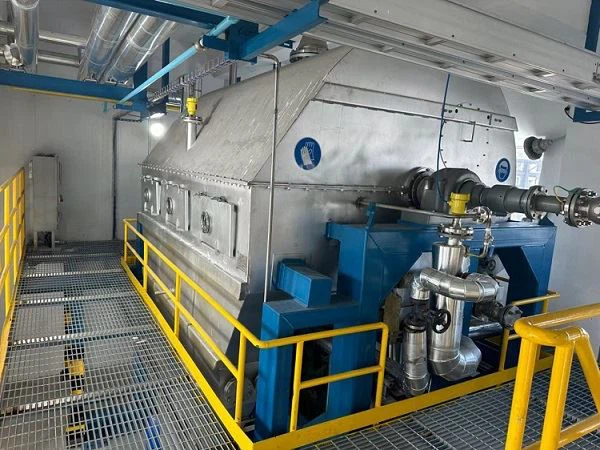
Advantages for Chemical Material Flaking
1. Versatility
One of the biggest advantages of a Condensing Drum Flaker is its versatility. It can handle a wide range of chemical materials, from caustic soda to sulfur and fatty acids. For example, if you're dealing with Drum Flaker For Caustic Soda, the flaker can effectively convert the molten caustic soda into solid flakes. This is super useful because caustic soda in flake form is easier to handle, store, and transport compared to its liquid state.
Similarly, for Drum Flaker For Sulfur, the flaker can take the molten sulfur and turn it into flakes. Sulfur is widely used in the chemical industry, and having it in flake form makes it more convenient for further processing in various applications.
2. Efficient Cooling
Chemical materials often need to be cooled rapidly to achieve the desired flake quality. Condensing Drum Flakers are designed to provide efficient cooling. The rotating drum has a large surface area, which allows for a high rate of heat transfer. This means that the liquid chemical material can be quickly cooled and solidified into flakes. The cooling process can be precisely controlled, ensuring that the flakes have the right properties, such as size, density, and hardness.
3. Consistent Flake Quality
When it comes to chemical materials, consistency is key. A Condensing Drum Flaker can produce flakes with a high degree of consistency. The uniform rotation of the drum and the controlled cooling process result in flakes that are similar in size and shape. This is important because it ensures that the chemical material will perform consistently in downstream processes. Whether you're using the flakes in a chemical reaction or for blending with other substances, you can rely on the consistent quality of the flakes produced by the flaker.
Specific Chemical Applications
1. Fatty Acids
Fatty acids are widely used in the production of soaps, detergents, and lubricants. Drum Flaker For Fatty Acid can effectively convert molten fatty acids into solid flakes. The flaking process helps to preserve the chemical properties of the fatty acids and makes them easier to handle. The flakes can be easily stored and transported, and they can be accurately measured for use in various manufacturing processes.
2. Inorganic Chemicals
Many inorganic chemicals, such as certain salts and metal oxides, can also be flaked using a Condensing Drum Flaker. For example, some metal salts need to be in flake form for better solubility and reactivity in chemical reactions. The flaker can take the molten or concentrated solution of these inorganic chemicals and transform them into solid flakes, which can then be used in a variety of industrial applications.
Considerations for Using a Condensing Drum Flaker with Chemicals
While a Condensing Drum Flaker is a great option for chemical material flaking, there are a few things to keep in mind.
1. Material Compatibility
It's important to ensure that the chemical material is compatible with the materials used in the construction of the flaker. Some chemicals may be corrosive or reactive, so the drum and other components of the flaker need to be made of materials that can withstand these conditions. For example, if you're flaking a highly corrosive chemical, the drum may need to be coated with a special material to prevent corrosion.
2. Safety
Working with chemicals always comes with safety risks. When using a Condensing Drum Flaker for chemical material flaking, proper safety measures need to be in place. This includes having appropriate ventilation systems to prevent the release of harmful fumes, wearing protective equipment, and following strict operating procedures.
3. Process Optimization
To get the best results, the flaking process needs to be optimized for each specific chemical material. This may involve adjusting parameters such as the drum speed, the thickness of the liquid layer applied to the drum, and the cooling rate. By fine - tuning these parameters, you can ensure that the flakes have the desired quality and properties.
Types of Condensing Drum Flakers
There are different types of Condensing Drum Flakers available, each with its own advantages and suitable applications. One type is the Condensation Rotary Drum Flaker. It offers a continuous and efficient flaking process, making it suitable for high - volume production of chemical flakes.
Another type is the Rotary Drum Flaker. This type is known for its reliability and flexibility. It can be easily adjusted to handle different types of chemical materials and can be customized to meet specific production requirements.
Conclusion
In conclusion, a Condensing Drum Flaker is definitely a viable option for chemical material flaking. Its versatility, efficient cooling, and ability to produce consistent flake quality make it a popular choice in the chemical industry. Whether you're dealing with caustic soda, sulfur, fatty acids, or other chemical materials, a well - designed and properly operated flaker can help you achieve your production goals.
If you're in the market for a Condensing Drum Flaker for chemical material flaking, don't hesitate to reach out. We'd be more than happy to discuss your specific needs and provide you with the right solution. Let's start a conversation and see how we can help you improve your chemical flaking process.